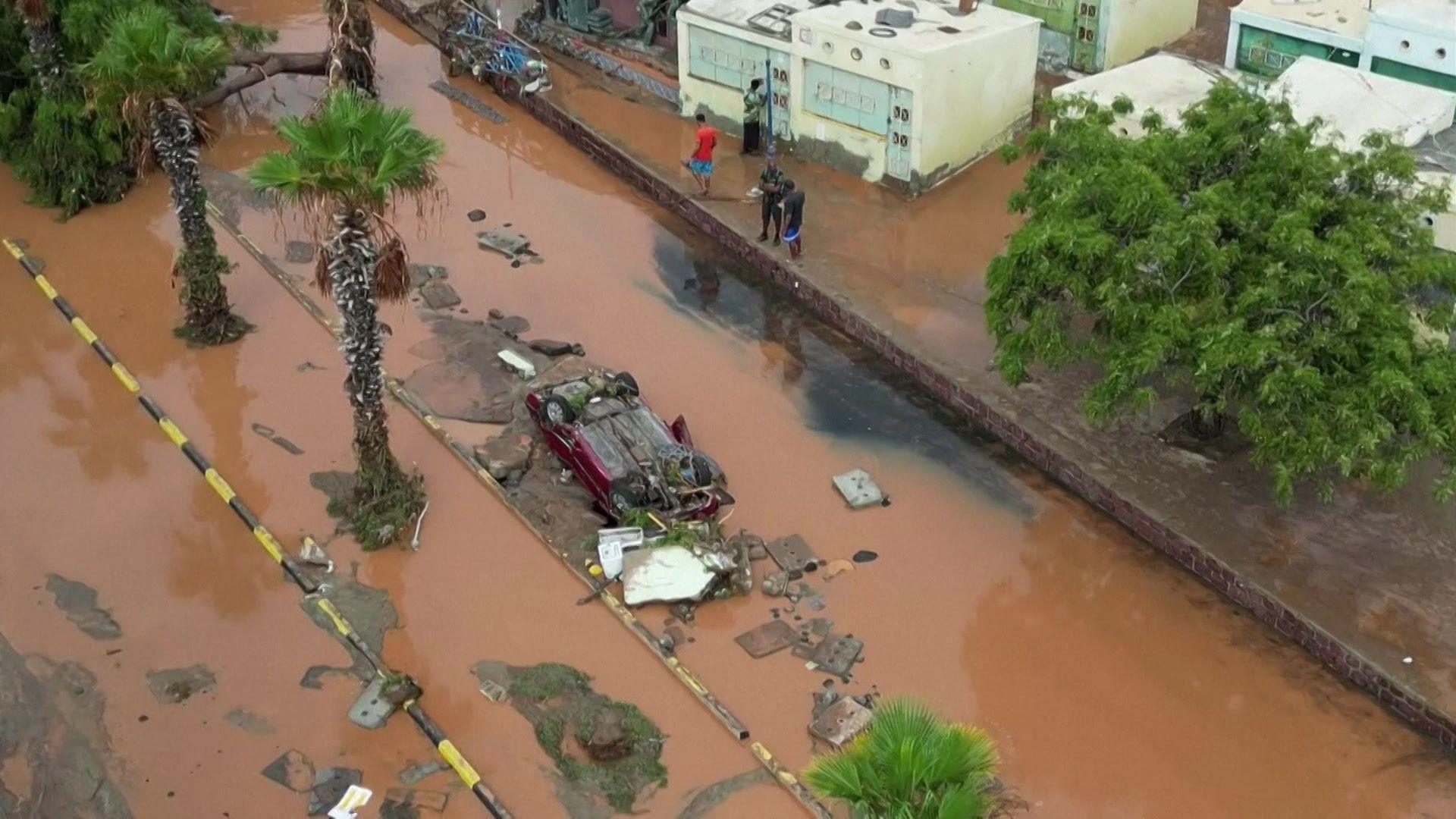
Torrential rains have devastated northern Pakistan, triggering catastrophic floods that have taken hundreds of lives and left countless families without homes. Entire villages have been swept away, and many survivors are now struggling to find food, shelter, and clean drinking water. For days, relentless downpours have continued to batter the region, overwhelming rivers and dams, and submerging towns that once served as the economic lifeline for thousands of households. The sheer force of the water has left behind a trail of destruction that local officials describe as one of the worst natural disasters to hit the country in recent years.
Emergency teams have been sent to the hardest-hit regions, although the extent of the destruction has made handling emergency situations extremely challenging. Routes and bridges have been swept away, isolating communities from external support. In some mountainous areas, helicopters are the sole method to bring relief, but harsh weather conditions have impeded even those activities. Locals have depicted scenes of despair, with individuals holding onto rooftops and trees as the water levels climbed rapidly.
The government of Pakistan has declared a state of emergency, urging international partners to step in with humanitarian assistance. Relief camps are being set up, but these temporary shelters are already reaching capacity as displaced families continue to arrive. Conditions in these camps remain precarious, with limited access to medical care and inadequate sanitation facilities raising fears of disease outbreaks. Health workers are particularly concerned about waterborne illnesses such as cholera and dysentery, which often spread rapidly in the aftermath of major floods.
The floods have caused significant devastation to human life and caused massive economic losses. Agricultural lands have been inundated, wiping out crops that numerous families rely on for their survival. A large number of livestock have perished, depriving rural areas of essential resources for both income and sustenance. Initial evaluations point to damages totaling billions of dollars, a harsh setback for a country frequently grappling with economic difficulties. The farming industry, which provides jobs to a large segment of Pakistan’s citizens, might require several years to completely rebuild.
Experts in climate studies have highlighted the catastrophe as a clear indication of the escalating danger of climate change. Although Pakistan contributes minimally to worldwide carbon emissions, it has emerged as one of the nations most at risk from global warming. Higher temperatures have changed precipitation patterns, made monsoon seasons more intense, and sped up the melting of glaciers in the northern mountain regions. These elements have collectively elevated the risk of severe flooding, putting populations in low-lying regions in constant jeopardy.
For those who have survived, the emotional impact is just as devastating as the physical damage. Families grieving the loss of loved ones are doing so amid the disorder, while some are frantically looking for family members who are still missing. Numerous children were split from their parents in the chaos of escaping the surging waters, and now relief organizations are striving to bring them back together. Tales of endurance are surfacing, from villagers who swam to safety after their homes fell apart, to rescuers who faced fierce currents to save families in peril.
International humanitarian organizations are mobilizing to provide relief, sending food supplies, clean water, tents, and medical equipment. Countries across Asia, the Middle East, and Europe have pledged financial assistance and resources. However, aid workers caution that relief alone is not enough; long-term recovery will require significant investment in rebuilding infrastructure and developing climate-resilient systems. Without these measures, experts warn, Pakistan will remain trapped in a cycle of disaster and recovery, with each flood undoing years of progress.
The inundations have also sparked renewed debates within Pakistan regarding its readiness for disasters. Some critics point out that a lack of investment in flood protection, insufficient early warning mechanisms, and subpar urban development have all played a part in the magnitude of the disaster. Numerous floodplains have been turned into housing and commercial areas, ignoring constant warnings, which places millions in jeopardy when severe weather hits. There is an increasing demand for more thorough planning, improved drainage systems, and measures to shield vulnerable regions from uncontrolled development.
Meanwhile, political tensions complicate the government’s ability to respond effectively. With economic challenges already straining national resources, authorities face the daunting task of balancing immediate relief with long-term reconstruction. Opposition leaders have criticized the government for being slow to act, while officials insist that the unprecedented magnitude of the flooding has overwhelmed even the most prepared systems. This tension underscores the broader challenges Pakistan faces in addressing natural disasters while navigating political and economic instability.
Local communities, however, continue to demonstrate remarkable resilience. Volunteers have joined rescue operations, often risking their own safety to help neighbors trapped by floodwaters. Religious and community organizations are opening their doors to provide shelter and distributing food to those in need. These grassroots efforts highlight the strength and solidarity of Pakistan’s people, even in the face of overwhelming adversity.
Examining the future, the path to recovery is anticipated to be lengthy and challenging. Whole communities must be reconstructed, agricultural areas restored, and infrastructure built anew. The undertaking is substantial, yet specialists highlight that it also provides a chance to reconstruct in a manner that is both safer and more sustainable. By allocating resources to climate adaptation actions, enhancing disaster readiness, and updating infrastructure, Pakistan can work towards decreasing its susceptibility to forthcoming catastrophes.
The flooding crisis has made clear that climate change is not a distant threat but an immediate challenge with devastating consequences. While the international community has expressed solidarity with Pakistan, questions remain about the level of support that will ultimately materialize. For many in the country, the hope is that this tragedy will serve as a catalyst for greater global action on climate resilience, not only in Pakistan but in all nations facing similar risks.
As the waters slowly recede, the true extent of the disaster is only beginning to emerge. Officials warn that the death toll is likely to rise as rescue teams reach previously inaccessible areas. The emotional scars, however, may endure far longer than the physical damage. For countless families, life has been permanently altered, and the road to recovery will be filled with challenges. Yet amid the despair, there is determination to rebuild, and the resilience of Pakistan’s people remains a source of strength in this time of crisis.